Best USB to Speaker Cables for Clear Audio
Choosing the right USB-to-speaker cable can unlock better sound from laptops, desktops, game consoles, and audio gear. Cable choices vary by connector type, length, and DAC quality. The following five cables connect USB to common speaker inputs—3.5mm, RCA, or 6.35mm TRS—and are versatile for home setups and small studios. This guide explains how each model works, where it shines, and what to consider before buying. All selections prioritize reliable signal transfer, ease of use, and durable construction for daily use.
| Product | Connector Type | Length | Best For |
|---|---|---|---|
| CIQILY USB To 3.5mm Aux Cable | USB-A to 3.5mm | 3 ft | Desktops, headphones, small speakers |
| MCSPER USB To RCA Audio Cable | USB-A to RCA | 6.6 ft | Home stereos and RCAs |
| BERLAT USB To 3.5mm Aux Cable | USB-A to 3.5mm | 3.3 ft | Beats, portable audio, USB DACs |
| NCGGY USB To 6.35mm TRS Cable | USB-A to 1/4″ TRS | 6.6 ft | Amplifiers, mixers, Hi‑Fi gear |
| PWR+ 25Ft USB Type-A To Type-B Cable | USB-A to USB-B | 25 ft | Audio interfaces, MIDI gear, long runs |
CIQILY USB To 3.5mm Aux Cable

The CIQILY USB To 3.5mm Aux Cable converts USB audio into a standard 3.5mm output, adding a dedicated audio port to devices that lack a working jack. It is designed to replace a faulty sound card or port and works with headphones, home stereo systems, and external speakers that support a 3.5mm input. The cable length is 3 feet, and construction uses a nylon braided jacket for durability. A built-in DAC enhances signal decoding, delivering clearer, more detailed sound at up to 24-bit/96kHz. The design is uni‑directional, moving audio from USB into the 3.5mm jack; mic input and recording functions are not supported through this path. This makes it a practical, plug‑and‑play upgrade for desktops or laptops with limited or damaged analog outputs.
In practice, this cable shines when a computer’s built‑in audio port is compromised or absent. It provides a quick route to amplify computer audio through powered speakers or a destination with a 3.5mm input. Because it relies on a DAC inside the USB module, users typically notice a more consistent signal than from a damaged jack. Its compact length keeps cable clutter low on desks and nightstands, while the braided jacket adds resilience for daily use. It is especially useful for gaming consoles that support USB sound devices or for upgrading older equipment that lacks a functional 3.5mm output.
MCSPER USB To RCA Audio Cable

The MCSPER USB To RCA Audio Cable provides a USB-A to dual RCA output, enabling a direct path from a USB host to a stereo system, TV, DVD player, or other RCA‑equipped gear. The cable uses high‑quality DAC components and copper wiring with gold‑plated connectors to reduce signal loss and corrosion, delivering clean, robust stereo sound with minimal interference. At 6.6 feet, it offers enough length for mid‑sized setups, whether the PC sits near the TV cabinet or a desktop two‑story media rack. It supports standard USB audio transmission, transferring digital data to an analog RCA pair for reliable playback. It is designed for plug‑and‑play use with Windows, macOS, and Linux systems and aims to preserve audio fidelity across components.
When used with a home theater receiver or powered speakers, this cable can simplify a clean, two‑box setup. It is particularly suitable for users with USB DACs or USB-enabled PCs who want to bypass limited on‑board sound cards. While it does not support microphone input or video signals, its RCA outputs align with most consumer audio gear. The length helps accommodate furniture layouts where the PC, console, or streamer hub sits away from the audio system, reducing the need for extra adapters or adapters. This makes it a practical, straightforward upgrade for richer, room‑filling sound.
BERLAT USB To 3.5mm Aux Cable

The BERLAT USB To 3.5mm Aux Cable is designed to transfer power and data to enable audio playback through a standard 3.5mm jack. It is described as compatible with a range of USB-enabled devices and accessories, including certain wireless headphones and personal audio players. The product notes emphasize charging and data transmission alongside audio output, highlighting versatility for devices that may require simultaneous power delivery and audio streaming. It’s a compact 3.3‑foot cable intended for projects where a USB DAC or power‑rechargeable audio source needs a simple, single‑cable solution, with caution noted for compatibility with specific devices such as certain televisions or car systems.
For users seeking a portable, multi‑function cable, BERLAT offers a convenient option to charge and feed audio to a 3.5mm speaker or headset. It can be particularly appealing for on‑the‑go setups, small desks, or dorm rooms where space is tight and device charging is a priority. As with any USB‑to‑analog adapter, results vary by device and DAC quality. Prospective buyers should confirm that their target speaker or headset accepts 3.5mm analog input and that the USB host can supply adequate power if needed for the DAC to operate correctly.
NCGGY USB To 6.35mm TRS Audio Cable

The NCGGY USB To 6.35mm TRS Audio Cable connects a USB source to a 6.35mm TRS input, enabling audio output to mixers, amplifiers, or Hi‑Fi gear with standard quarter‑inch jacks. It’s designed for a 6.6‑foot run, giving flexibility for desktop arrangements or studio setups where the computer sits on a work surface away from the sound system. The cable’s USB A to 1/4″ output is intended to carry audio signals in one direction—from USB host to analog input—without supporting USB input from analog devices. It’s described as easy to use, plug‑and‑play, and compatible with Windows, Mac OS, and Linux environments.
For users building a compact studio or home theater with a traditional analog chain, this cable can simplify connections to analog mixers or powered speakers that lack USB input. Since it does not convert 6.35mm signals back to USB, it is best suited for playback paths rather than recording. The 6.6 ft length accommodates typical desk-to-system distances, and the cable is a straightforward upgrade when your audio chain relies on a USB source feeding a large format or pro‑style input.
PWR+ 25Ft USB Type-A To Type-B Cable
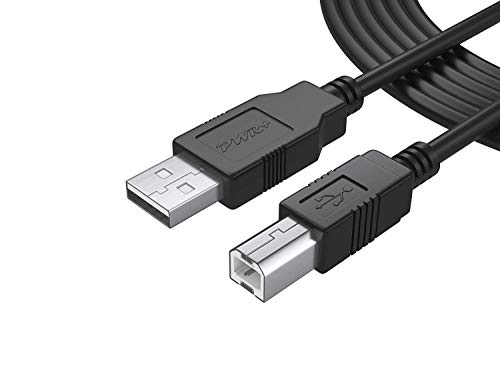
The PWR+ 25Ft USB Type-A To Type-B Cable is a long‑reach USB 2.0 cable designed for high‑speed data transfer up to 480 Mbps, with a heavy focus on reliability for longer runs. The 28AWG/2C and 26AWG/2C conductors are optimized for reduced signal loss, making it suitable for connecting audio interfaces, MIDI keyboards, mixers, USB microphones, and other USB‑B devices to a computer or laptop. It also serves as a durable replacement for USB‑B cables in printers, scanners, and other peripherals. While not a direct speaker cable, it supports long, clean connections in studio setups where USB audio devices reside away from the host computer or rack of gear.
When planning a larger home studio or classroom setup, this 25‑foot option reduces the need for multiple short cables and extenders. The cable’s build emphasizes durability, which is important in busy environments with foot traffic or equipment movement. Users should note that USB‑B endpoints vary by device; ensure the receiving device supports USB audio and that the cable length does not exceed the maximum recommended distance for stable USB performance to maintain reliable audio playback and device control.
Buying Guide
Connector Type and Use Case
USB-to-analog cables come in several connector types: 3.5mm, RCA, and 6.35mm TRS. Choose based on your speaker’s input: 3.5mm jacks suit compact speakers and headphones, RCA works with most home stereos and AV receivers, and 6.35mm TRS suits professional amplifiers and mixers. If you plan to connect to a computer’s USB port to feed a standard home audio system, USB-to-analog adapters with built‑in DACs are typically best. Also consider whether you need stereo outputs only or if a multi‑channel arrangement is required for your setup.
Length and Flexibility
Cable length matters for clean layouts. Short cables reduce clutter but constrain placement, while long runs enable flexible room design, especially in living rooms or studios. For desk setups, 3–6 feet is often ideal; for classroom or home studios, 10–25 feet can be practical. Flexibility also matters: braided jackets resist wear, and thicker gauge supports durability over time. If the route involves corners or under desks, consider a slightly longer option to prevent tension on connectors.
DAC Quality and Signal Path
Many USB-to-analog adapters include a DAC (digital-to-analog converter). The DAC’s quality influences detail, dynamic range, and noise floor. Look for cables advertised with higher sample rates (such as 24-bit/96kHz) and low-jitter performance. Note that some cables are unidirectional (USB to audio only) and do not support microphone input or reverse audio from analog sources back to USB. If you need input as well as output, choose a solution designed for bidirectional audio or a hardware interface with multiple inputs.
Compatibility and Power Considerations
Check device compatibility: Windows, macOS, and Linux support may vary by DAC. Some USB audio adapters require bus power from the computer and may not work reliably with devices delivering minimal USB current. In portable setups, ensure the DAC does not draw more power than your host device can supply. If your equipment uses RCA or 1/4″ inputs, ensure the chosen cable matches the connector type and that your receiver or powered speaker supports that input format.
Durability and Build Quality
Budget cables can fail at connector joints or become brittle over time. Look for braided jackets, robust strain relief, and gold-plated connectors when possible. A longer cable with strong shielding helps reduce EMI and crosstalk, especially in rooms with wireless devices and other electronics. If you frequently move equipment, a durable build will extend life and reduce maintenance costs.
Practical Scenarios
For a computer room driving a compact bookshelf speaker, a USB-to-3.5mm cable from CIQILY or BERLAT can be a quick fix for a failing onboard audio. For a home entertainment setup with a separate stereo or AV receiver, a USB-to-RCA option like MCSPER provides an easy path from a USB source to analog inputs. In studio environments with mixers or amplifiers that use 1/4″ inputs, the NCGGY cable offers a direct USB-to-TRS link. And for long-distance connections between a computer and a large USB‑B device, the PWR+ 25‑foot cable enables reliable, low‑stress runs without sacrificing signal integrity.