Best Speaker Stands on Wheels for Mobile Audio Setups
Choosing the right speaker stand on wheels can simplify stage, studio, or living room setups by allowing quick placement and stable listening angles. This guide highlights five Amazon options that balance mobility, stability, and versatility for speakers and other AV gear. We compare wheel presence, height adjustability, weight capacity, and special features to help you pick a cart-style or stand-alone solution that fits your space. The table below summarizes core specs to jump-start your decision.
| Product | Brand | Height Range | Weight Capacity | Wheels |
|---|---|---|---|---|
| Tossbiss Laptop Tripod On Wheels | Tossbiss | 25.9″ – 51.8″ | Not specified | Yes (3 swivels with brakes) |
| Rfiver Mobile TV Stand | Rfiver | 23″ – 60″ | Up to 88 lbs | Yes |
| Aokitsink Mobile TV Stand With Drawer | Aokitsink | 44.02″ – 47.24″ | Not specified | Yes |
| Amazon Basics Speaker Stand | Amazon Basics | 52″ – 73″ | 99.2 lbs | No |
| Pyle Tripod Speaker Stand | Pyle | 36.2″ – 58″ | Up to 100 lbs | No |
Tossbiss On-Wheels 3-in-1 Stand
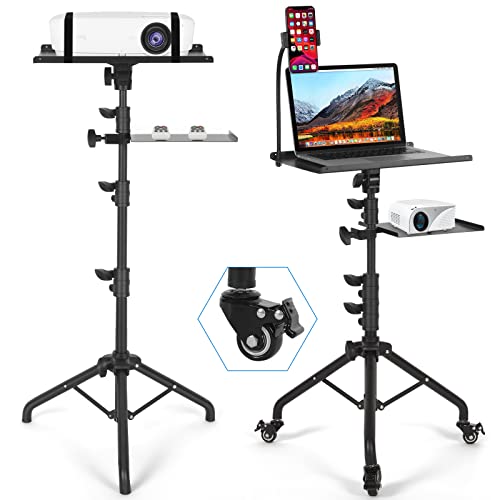
The Tossbiss Laptop Tripod on Wheels with 2 Shelves is a versatile three-in-one stand that supports projectors, laptops, and other AV devices in a compact package. The top tray tilts up to 90 degrees in both directions, allowing flexible viewing angles, while the bottom tray adjusts in height to accommodate different gear configurations. A gooseneck phone holder adds convenience for quick device access during presentations. Three silent swivel wheels with individual brakes enable smooth, wobble-free movement and secure placement on demand. With a height range of 25.9″ to 51.8″, this setup adapts to seated or standing users and can help eliminate cable clutter by locating equipment precisely where you need it.
While its primary emphasis is on projector and laptop support, the two shelves provide a light-duty platform suitable for smaller PA speakers or compact bookshelf speakers. Pros include mobility, adjustable angles, and a straightforward brake system. Potential trade-offs include weight capacity limitations and the fact that the product markets as a projector stand rather than a dedicated speaker stand. For users prioritizing quick repositioning and multi-device versatility, this option adds notable value to a mobile AV configuration.
Key features include: a 3-in-1 design, removable wheels, and a broad height adjustment. The top tray’s tilt and the bottom tray’s adjustable height enable varied listening/viewing angles and ergonomic positioning, which can help reduce strain during long sessions. When used with heavier speakers, verify weight limits and consider additional stabilization to maintain balance on uneven floors.
Rfiver Mobile TV Stand With Wheels

The Rfiver Mobile TV Stand is designed as a rolling cart for 23- to 60-inch screens, but its solid metal construction and adjustable shelf also suit speakers and AV gear. The cart supports loads up to 88 pounds and includes adjustable height positioning to tailor the viewing or listening height. It features a versatile mounting system and a tilt capability to fine-tune the angle for optimized sound dispersion or screen visibility. The five-year manufacturer warranty offers added assurance for long-term use in homes, classrooms, or small venues.
One standout is its mobility combined with stability: the stand is built to roll smoothly on most floor types while maintaining a secure stance when brakes are engaged. The shelf configuration lets you place a small PA speaker, mixer, or other audio components alongside a display. This adaptability makes it useful for events, presentations, or living room setups where equipment needs to move between spaces quickly. When using it for speakers, check the weight distribution and ensure the base area supports the intended load without tipping during movement.
Notable capabilities include: universal 400×400 mm VESA compatibility for displays, a strong metal frame, adjustable shelves, and a tilt option for improved audio-visual alignment. The combination of wheels and adjustable features makes it a practical choice for multipurpose AV carts, though it remains essential to confirm compatibility with your specific speaker models and to consider wheel clearance on tight corners near furniture.
Aokitsink Rolling TV Stand With Shelf And Drawer

The Aokitsink Mobile TV Stand With Drawer provides a rolling cart solution with two shelves and a storage drawer. The height is adjustable within a narrow range of 44.02″ to 47.24″, making it suitable for shelving smaller AV gear, including compact speakers. The dual-shelf design accommodates a laptop, game console, speaker, or media player along with other accessories. The rolling design enhances portability for rearranging a room or staging events. The drawer helps keep remotes, cords, and small accessories organized, reducing clutter during setup and teardown.
Although marketed as a TV stand, its modular shelves and caster wheels extend its usefulness to speaker arrangements in small venues or living spaces. Weight capacity details are not specified in the listing, so verify the combined load you plan to place on the top shelf and drawer area before loading heavier items. If you frequently rework your layout, this option offers practical versatility and storage convenience in a mobile form factor.
Amazon Basics Speaker Stand

The Amazon Basics Speaker Stand provides a sturdy and straightforward solution for elevating speakers in stages, studios, or home theaters. It supports up to 99.2 pounds and offers a tall height range from 52 to 73 inches, enabling speaker placement for optimal listening angles within various room layouts. The construction uses durable steel tubing and is designed for reliable stability on flat surfaces. The upper shaft measures 1.4 inches (35 mm) in diameter, which ensures compatibility with many standard 35 mm inserts, with a note about adapters if the speaker bottom hole diameter differs from 38 mm.
This model’s strength lies in its simplicity and reliability rather than mobility. It does not include wheels, which makes it a stationary option ideal for fixed-stage setups or home theaters where movement is limited. The wide tripod base provides solid stability, and the absence of wheels reduces the risk of unwanted rolling in high-traffic spaces. If you need a rugged, long-term stand for heavier speakers that will remain in one place, this is a solid, budget-friendly choice.
Pyle Tripod Speaker Stand With 35mm Compatibility

The Pyle Tripod Speaker Stand combines a sturdy steel design with universal 35mm compatibility for a wide range of loudspeakers. It features adjustable height from 36.2 inches to 58 inches and supports speakers up to 100 pounds. The tripod design includes a center brace for added stability, and the stands collapse for easier transport or storage. This model is well-suited for home studios, small venues, or portable setups where heavier speakers need reliable elevation without wheels.
Key advantages include robust construction, simple height adjustment, and compatibility with common 35 mm inserts, which reduces compatibility concerns for many popular speaker brands. A potential limitation is its lack of wheels, which means it’s better suited for fixed installations or where rolling isn’t a requirement. For temporary events that require mobility, you’d need to pair this with a rolling cart or choose a wheeled alternative from the list above.
Buying Guide
- Mobility vs. stability: Decide if you need wheels for quick repositioning or a stationary stand for steady, long-term use. Wheeled options offer flexibility in room layouts, while fixed stands often deliver simpler setups and fewer tipping risks.
- Weight capacity: Check the total weight of your speakers and accessories. Models like the Amazon Basics stand support up to 99.2 lbs, whereas some theater or heavy-duty stands may exceed or vary from that amount. Overloading can compromise safety and sound quality.
- Height range and tilt: Consider your listening position. Taller stands (52″ to 73″ for some models) suit elevated seating and stage setups, while shorter ranges are better for desktop or low-angle listening. Tilt capability helps aim the speaker toward the preferred listening area.
- Mounting compatibility: Many speaker stands use standard 35 mm or 38 mm pole inserts. Confirm insert compatibility with your speakers to avoid adapters that add clutter or instability.
- Base design and footprint: A wide, stable base reduces tipping risk, especially on rolling carts. For smaller rooms, a narrower footprint with sturdy legs can be more practical than a larger cart.
- Shelves and additional storage: Some stands include shelves or drawers to organize cables, remotes, and accessories. This can streamline setup and teardown, reducing clutter during performances or presentations.
- Accessories and warranty: Look for included clamps, anti-slip pads, or cable-management options. A multi-year warranty can provide reassurance for frequent travel or high-demand gigs.
- Portability and storage: If you travel often, collapsible or foldable stands save space. Consider whether the stand disassembles easily and whether carrying bags are included.
- Surface compatibility: For hard floors or carpet, wheels with brakes help keep the stand in place and protect floors from scratches. If you’ll use it on varying surfaces, ensure wheels are robust and have reliable brakes.
In choosing the best speaker stand on wheels, balance your need for mobility with stability and load capacity. If you require frequent reconfiguration, prioritize wheeled models with adjustable shelves and brakes. For fixed installations, a tall, sturdy non-wheeled stand may deliver superior stability and cleaner aesthetics. The five options reviewed here cover a spectrum from multi-use AV carts to dedicated speaker stands, offering practical paths to optimize your audio setup.