Best Flat Wound Acoustic Strings for Rich, Warm Tones
Flat wound acoustic strings deliver a smooth, articulate sound with a warm balance that many players crave for jazz, blues, and classic acoustic styles. This guide highlights five top flat wound options that suit different playing styles and skill levels. The selections emphasize traditional phosphor bronze and classic flatwound designs, helping you choose based on tone, playability, and durability. The buyer types range from beginner strummers seeking mellow color to seasoned players chasing a refined jazz voice.
Summary of selected products
| Product | Type | Best For | Key Benefit |
|---|---|---|---|
| D’Addario Flat Tops EFT16 | Phosphor Bronze Flat Top | All-genre acoustic players | Precise winding for balanced warmth |
| D’Addario Flat Tops EFT15 | Phosphor Bronze Flat Top | Players seeking standard acoustic tone | Reliable balance and warmth |
| D’Addario EJ16-3D Phosphor Bronze | Acoustic Phosphor Bronze | Traditional acoustic tones | Long-standing standard in acoustics |
| Thomastik-Infeld Jazz Swing Acoustic Flatwound | Flatwound Acoustic | Jazz-focused players | Rich, warm traditional jazz voice |
| Thomastik-Infeld Jazz Swing Acoustic Set (Flatwound) | Flatwound Acoustic | Serious jazz tone | Durable, articulate flatwound tones |
D’Addario Flat Tops EFT16, 12-53
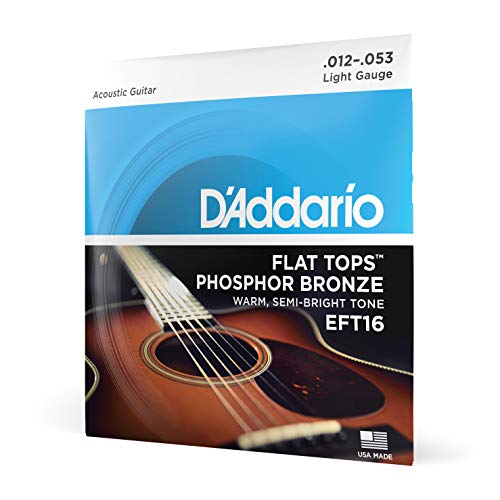
Best for players who want a classic, balanced acoustic voice with a touch of warmth. EFT16 uses phosphor bronze wrap wire over a hex core, producing a well-balanced tone across the fretboard. Precision winding and polishing ensure smoother playability with fewer string noises. Choose this if you prefer a traditional, versatile acoustic sound suitable for blues, folk, and singer-songwriter styles. A limitation is that phosphor bronze can be more prone to corrosion with sweat and oils over time, so regular changes are recommended.
D’Addario Flat Tops EFT15, 10-47

Best for players seeking a standard feel with traditional balance and warmth. EFT15 shares the same precision winding and phosphor bronze wrap, tuned for all genres. It’s a solid all-around choice for rhythm players and recommends frequent changes for consistent tone. A caveat: lower-tension sets can be less resistant to aggressive picking, potentially causing faster string wear if used aggressively.
D’Addario EJ16-3D Phosphor Bronze Acoustic Strings

Best for traditional acoustic tones with a long-standing reputation. EJ16-3D features phosphor bronze wrap wire on a hex-core, delivering warm warmth and balanced projection across genres. This set is ideal for players who want a familiar acoustic voice that remains consistent over time. One limitation is that bronze strings may require more frequent cleaning or wiping after playing to maintain tone and longevity.
Thomastik-Infeld Jazz Swing Acoustic Flatwound

Best for serious jazz players who value a rich, traditional voice. This flatwound option emphasizes a blend of fundamental tones and overtones with a classic jazz warmth. The durability of nickel construction supports articulate playability for complex chord voicings. Better for players who don’t mind a slightly stiffer feel in exchange for a deeply expressive jazz guitar tone. Avoid if you primarily play bright, modern acoustic styles demanding brighter harmonic content.
Thomastik-Infeld Jazz Swing Series Flatwound Electric (for comparison)

Best for players exploring a traditional jazz electric texture with flatwound feel. This option showcases a distinct flatwound vibrato and a warm analytic timbre. It’s included here for comparison purposes to illustrate the differences between acoustic and electric flatwounds. Use this as a reference for tonal expectations when comparing to acoustic flatwounds, but avoid using it as a direct substitute for an acoustic guitar in most settings.
Buying Guide
What should you consider when choosing flat wound acoustic strings?
- Tone goal: Do you want a balanced general acoustic voice or a warmer jazz-forward tone?
- Material: Phosphor bronze is common for brighter warmth; flatwound designs offer a smoother feel and darker tonality.
- Core and winding: Hex-core cores with precision winding improve intonation and stability across the fretboard.
- Gauge and tension: Lighter gauges are easier to play but may break sooner; heavier gauges yield more volume but can be stiffer.
- Durability vs. tone: Bronze can corrode with sweat; consider coating or more frequent changes for long-term play.
- Playing style: Jazz players may favor flatwound sounds for rich overtones; folk players may prefer crisp, balanced acoustic responses.
FAQ
- Q: What makes flat wound acoustic strings different from round wound? A: Flat wound strings have a flat wire wrap, producing a smoother feel and mellower, more even tone with reduced finger noise.
- Q: Are phosphor bronze flat tops good for jazz? A: Yes; they provide warmth and balance that suit traditional jazz tones while remaining versatile for other genres.
- Q: How often should I change flat wound acoustic strings? A: Frequency depends on playing style and environment, but harsher playing or exposure to sweat can necessitate more frequent changes.
- Q: Should I choose lighter or heavier gauge flat wound acoustic strings? A: Lighter gauges are easier to play; heavier gauges offer more volume and sustain but require more finger strength.
- Q: Do flatwound acoustic strings affect intonation? A: Properly wound strings with a hex-core design help maintain intonation across the fretboard.
- Q: Can I use flat wound electric strings on an acoustic guitar? A: No; electric strings are designed for different tension and tensioning requirements and may damage an acoustic guitar.