Best 18-Inch Subwoofer Cabinets for Powerful, Portable Bass
Choosing an 18-inch subwoofer cabinet means weighing power, durability, and compatibility with your existing gear. The five models below cover powered and passive designs suitable for weddings, clubs, churches, venues, and home theaters. Each entry highlights core specs, ideal environments, and notable features to help you compare at a glance. The Buying Guide after the product sections explains key purchase considerations—power handling, impedance, enclosure construction, and connectivity—so you can select the best match for your venue and setup.
| Product | Brand | Type | Woofer | Power (W) |
|---|---|---|---|---|
| PRORECK SP-18X 18-Inch Powered Subwoofer | PRORECK | Powered | 18″ | 800W RMS / 3000W Peak |
| PRORECK PR18 18-Inch Powered Subwoofer | PRORECK | Powered | 18″ | 400W RMS / 2000W Peak |
| Seismic Tremor_18-PW Powered Subwoofer | Seismic Audio | Powered | 18″ | N/A |
| Rockville PBG18 18-Inch Passive Subwoofer | Rockville | Passive | 18″ | 2000W Peak |
| JBL JRX218S 18-Inch Passive Subwoofer | JBL | Passive | 18″ | 350W RMS / 1400W Peak |
PRORECK SP-18X 18-Inch Powered Subwoofer

The PRORECK SP-18X delivers a robust 800W RMS (3000W peak) from an 18-inch low-frequency driver, making it suitable for mid-to-large venues. Its Class-D amplifier emphasizes efficiency while producing deep bass reinforcement. An 80-ounce magnet and a 3-inch voice coil support strong excursion and accurate low-end response. An electronic crossover from 35 Hz to 120 Hz allows easy integration with tops and monitors, while XLR input and output jacks simplify signal chaining from mixers or other amplifiers. The unit includes three DSP presets for Monitor and DJ Live scenarios, plus a third mode for additional versatility. Two side handles aid transport, and the cabinet weighs about 86.5 pounds.
In practice, the SP-18X shines in live sound setups where clear, punchy bass is required without separate subwoofers. Its built-in amplification reduces the amount of separate gear needed, while the wide crossover range helps tailor the sub to various tops. The physical build reflects professional use, with front-facing bass reinforcement and a rugged enclosure that can endure regular loading and unloading on tour or event days.
PRORECK PR18 18-Inch Powered Subwoofer
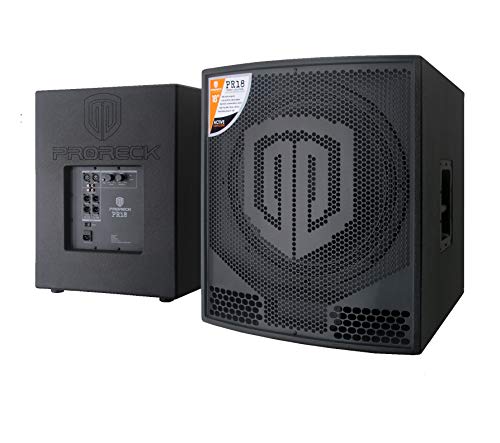
The PRORECK PR18 is a 18-inch powered subwoofer offering 400W RMS (2000W peak) with a 60-ounce magnet and a 3-inch voice coil. It provides a balanced XLR combo input and stereo RCA input to capture left and right signals, with a stereo RCA output and a full-range XLR combo output to pass audio onward. A filtered XLR output (100 Hz–20 kHz) helps route clean bass frequencies to additional subs or tops. The unit also features selectable phase from 0° to 180°, enabling synchronized coupling with other subs in a multi-sub system. Power-on and max-volume indicators aid quick setup. The crossover is adjustable from 40 Hz to 160 Hz.
With its flexible inputs and phase control, the PR18 is well-suited for venues that deploy multiple subs or require a simple upgrade from smaller, less powerful setups. The robust 18-inch driver is designed for bass-heavy venues such as clubs, weddings, and community events, where reliable performance and straightforward operation are essential.
Seismic Tremor_18-PW Powered Subwoofer

The Seismic Tremor_18-PW is an 18-inch powered subwoofer designed for PA use, featuring a woofer with a 90-ounce magnet and a 3-inch voice coil. The product page emphasizes its status as a powered option, suitable for larger rooms or venues needing substantial bass reinforcement. However, the listed features do not specify power ratings in RMS or peak, which means users should verify compatibility with their amplifiers and tops before purchase. The Tremor series is typically used in live sound environments where dependable low-end extension is required, such as small clubs, houses of worship, or event spaces.
As a powered solution, it simplifies signal flow by combining amplification with the subwoofer enclosure. For buyers, this model can be a practical choice when a straightforward, all-in-one bass component is preferred, provided the power requirements align with the rest of the system and venue demands.
Rockville PBG18 18-Inch Passive Subwoofer

The Rockville PBG18 is a passive 18-inch subwoofer designed for deep bass performance with a sturdy MDF cabinet and reinforced grille. With an impedance of 8 ohms, it pairs well with professional amplifiers and mixers, offering flexible setup options for clubs, venues, or studios. The package emphasizes deep, impactful bass from 30 Hz to 200 Hz, making it a strong foundation for larger PA systems or multi-sub configurations. The cabinet construction is built to withstand regular transport and performance conditions, ensuring durable, consistent sound across events.
As a passive option, the PBG18 requires an external amplifier or powered speaker system. This can be advantageous for users who want precise control over amplification and who already own compatible amps. The 18-inch driver supports substantial low-end output, making it suitable for DJs, venues, and stage productions that prioritize robust bass without sacrificing top-end clarity.
JBL JRX218S 18-Inch Passive Subwoofer

The JBL JRX218S is a passive 18-inch stage subwoofer with a 3-inch voice coil and a rugged cast-frame design. It handles 350W continuous (1400W peak) with an impedance of 4 ohms, and a frequency range of 34 Hz–250 Hz (-10 dB). The enclosure uses 19 mm MDF for durability and is finished in black carpet, delivering a professional look for touring rigs and permanent installations. Inputs include two SpeakOn connectors (parallel), with specifying a max SPL of up to 133 dB. This model suits users who need a reliable, high-SPL sub at a manageable weight and with flexible routing.
As a passive sub, the JRX218S depends on a compatible amplifier and tops, which can be beneficial for venues that already own gear and want precise control over amplification. Its robust build and significant bass potential make it a staple for live sound, clubs, and event spaces that demand dependable performance and easy integration into larger systems.
Buying Guide
Powered vs Passive Subwoofers
Powered subwoofers integrate amplification with the driver, simplifying setup and reducing the number of components to connect. They are ideal when you want a compact, all-in-one solution and when you need a straightforward signal chain. Passive subs require an external amplifier or powered tops, offering more flexibility to match exact power needs or to scale a system over time. For venues that already have amplifiers, a passive 18-inch sub can be a cost-effective upgrade.
Power Handling And Impedance
Look for RMS (continuous) power ratings and peak power to gauge how well the sub will handle quick bursts of energy in live sound. Impedance matters because it influences compatibility with your amplifier and the total load on the system. For example, 8-ohm passive subs are common and work well with many pro amplifiers, while 4-ohm loads can demand more from amplifiers but may yield higher output in some setups. Matching impedance and wattage to your tops and room size is critical for clean, impactful bass.
Enclosure Construction and Portability
Cabinet material and build quality affect durability and resonance. MDF enclosures are standard and offer solid performance at a reasonable weight. Heavier subs with reinforced enclosures and protective grills are better suited to frequent transport and rugged use. If you travel with your system, consider weight, handles, and dimensions to ensure quick loading and setup without compromising performance.
Connectivity And Signal Flow
Powered subs typically feature XLR or RCA inputs and outputs, along with crossover controls. This simplifies routing from mixers and sends bass to other subs or tops. Passive subs depend on your amplifier’s outputs and may require DI boxes or direct connect cables. When planning a system, map the signal flow from the mixer to the sub and to the tops, ensuring compatibility with your preferred cables and adapters.
Placement And Use Case Considerations
Placement affects bass perception. Subwoofers are often placed on the floor, near walls or corners, to maximize coupling with the room. In larger venues, multiple subs provide even bass distribution and reduce booth stress on tops. For portable events, consider models with handles and a smaller footprint. Also account for the audience size, ceiling height, and the types of music or programs you’ll host to select the right SPL and extension.
Quick Model Comparisons
- Powered options (SP-18X, PR18, Tremor_18-PW) offer all-in-one solutions, ideal for quick setup and smaller crews.
- Passive options (PBG18, JBL JRX218S) require an external amplifier but allow modular expansion and easier upgrades over time.
- For venues with existing amps, passive subs can be paired with high-quality tops to optimize headroom and tonal balance.
- For portability, consider weight, handles, and the cabinet’s physical dimensions to ensure efficient transport and setup.